
Who does what in a roof claim
Several people are involved and they have different jobs. Your insurer decides what the policy covers. An assessor or loss adjuster, usually appointed by the insurer, inspects the damage and reports on it. A roofer, either chosen by you or by the insurer depending on your policy and their process, describes and prices the work needed. You provide the facts: when the storm happened, what you saw, and the history of the roof.
The roofer's scope is evidence, not a decision. A good roofer describes what they can see, photographs it, and explains the work needed to repair it properly. They should not promise that the insurer will pay for it, and they should not describe damage that is not there. Being accurate protects you. An inflated scope can damage your credibility with the insurer and slow down the parts of the claim that are clearly valid.
Ask your insurer early how they handle roof claims. Moneysmart suggests asking whether you can choose your own repairers or whether the insurer prefers its own contractors, and what the settlement options are. Some insurers manage the repair through their builders, some pay a cash settlement, and some do a mix. Knowing which path you are on tells you whose scope matters most and when you need your own roofer's report.
Evidence that holds up
The strongest evidence is dated and specific. Photographs of the damage taken soon after the storm, hail stones with something for scale, broken tile pieces on paths, water stains inside and the date and time of the storm all help. The Bureau of Meteorology and local news often record significant Darling Downs storms, which can support the date. Moneysmart recommends photographing damage before temporary repairs and keeping receipts for emergency work.
Your roofer's photographs should show each damaged area in a way someone else can follow. A close-up of a cracked tile means little on its own. The same crack shown with a wider photograph of the slope, and a note of which elevation of the house it is on, is far more useful. Ask for photographs to be labelled with the location, such as north slope above the kitchen or valley between the garage and the house.
Older records matter too. If the roof was inspected, restored or repaired in recent years, the paperwork shows its condition before the storm. If you are buying the house, a building inspection report may describe the roof. None of this has to be perfect. The aim is to show the insurer what the roof was like before, and what changed after the storm.
Keep one folder, paper or digital, for the whole claim. Put the claim number, the names of everyone you spoke to, dates of calls, emails, the make-safe note, roofer reports, the assessor's report once you have it, and every receipt in the same place. Claims after a large storm can take weeks while insurers and trades work through many homes. When someone new picks up your file, being able to send the full history in one message saves repeating the story and reduces the chance of an item being missed.
| Scope item | What to ask for | Why it matters |
|---|---|---|
| Broken tiles or dented sheets | Count or area by slope, with labelled photographs | Lets the assessor check each item against the damage |
| Ridge, valleys and flashings | Condition of each, storm damage versus age | Separates covered damage from maintenance |
| Matching | Availability of the same profile and colour, options if not | Avoids a vague request for a larger job |
| Access and safety | Scaffold, edge protection or lift as a separate line | Explains a cost that applies to any size of repair |
| Areas not inspected | Areas under solar or unsafe to walk, noted clearly | Prevents surprises when work starts |
| Internal damage | Rooms affected, handled as a separate scope | Stops roof work waiting on ceiling decisions |
What a roof repair scope should itemise
A scope that says replace damaged tiles and make good is hard for anyone to assess. A useful scope lists each item: the approximate number of broken tiles on each slope, any ridge capping that needs rebedding or repointing, dented or split valley irons, damaged flashings, dented or split gutters and downpipes, and broken skylights or vents. For a metal roof it lists dented or holed sheets, cappings and flashings, and damaged fixings.
It should separately list access and safety work, such as scaffolding, edge protection or a lift, because those costs apply whether the repair is large or small. It should separate make-safe work already done from the permanent repair. It should also note what the roofer could not inspect, such as areas under solar panels or parts of the roof that were not safe to walk. Stating those limits avoids surprises later.
Internal damage belongs in its own section, usually handled by a builder or other trades: ceiling plaster, insulation, paint and any damaged fittings. The roofer can note where water came in and which rooms were affected, but the internal repair scope often needs its own assessment once the ceiling has dried. Keep them apart so the roof work is not held up waiting for the internal decisions.
Plan for what happens when the roof is opened. Lifting tiles or sheets sometimes reveals damage that could not be seen from above, such as a cracked sarking, a split batten or water-damaged timber around a valley. Ask the roofer how they will handle it: stop and photograph, notify you and the insurer, and price it as a variation before continuing. Agreeing that process at the start avoids a half-finished roof sitting under a tarp while an unexpected item is argued about.
Matching tiles and profiles
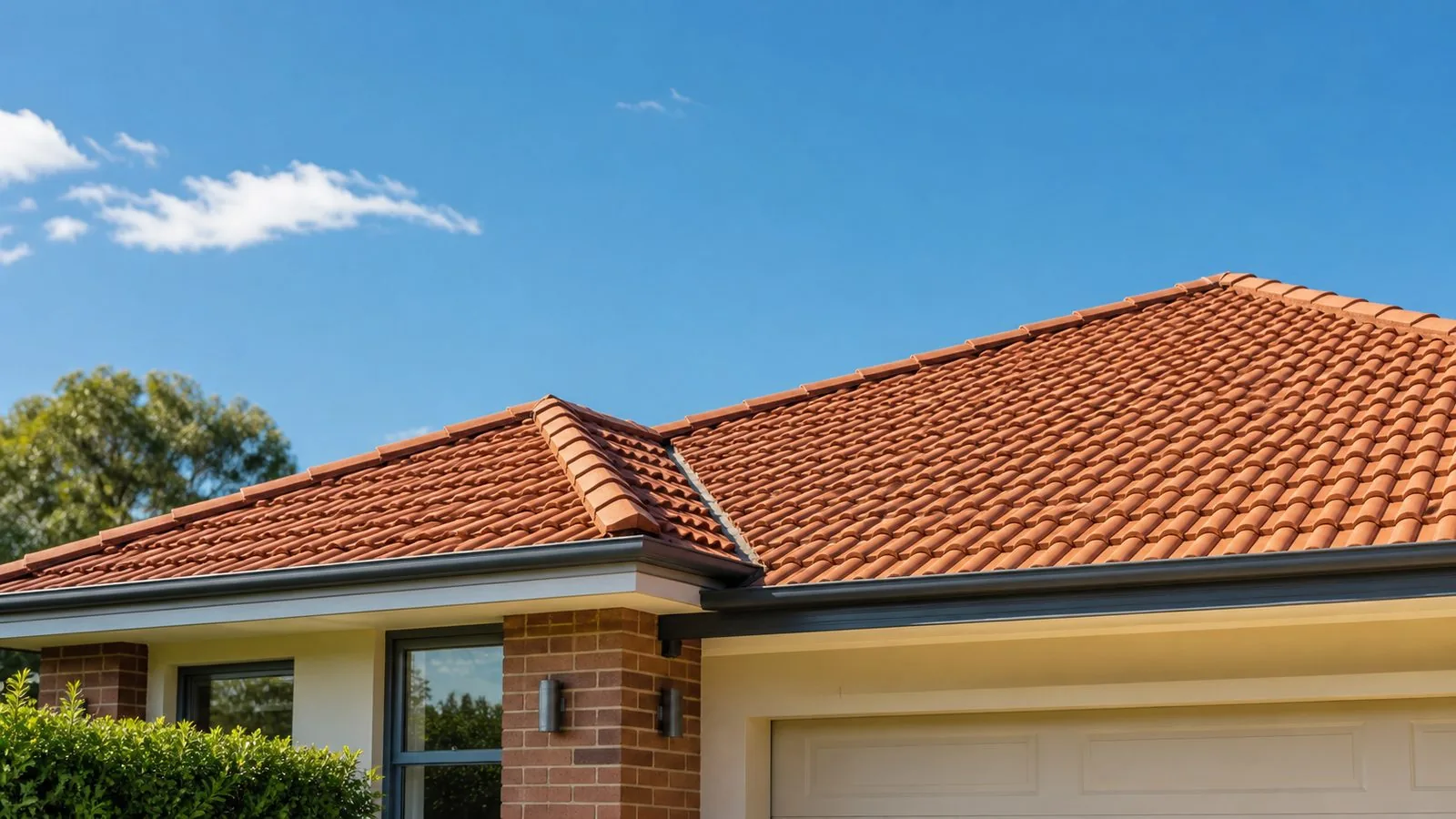
Matching is a common sticking point. Older concrete and terracotta tiles may no longer be made in the same profile or colour, and even a current tile can look different from weathered tiles next to it. Metal sheets may be available in the same profile but a different colour shade, or the profile may have been discontinued. A patch of new material on one slope can be obvious from the street.
Ask your roofer to state in the scope whether matching material is available, what they propose if it is not, and why. Options include sourcing second-hand tiles of the same profile, taking tiles from a less visible slope to repair the visible one and using new tiles on the hidden area, or replacing a whole slope or elevation so the difference is less noticeable. Each option has a different cost and outcome.
Whether the insurer will pay for more than the directly damaged area depends on your policy wording and the insurer's assessment. That is a question for the insurer, not something a roofer can guarantee. What the roofer can do is explain the matching problem clearly and give options, so the insurer is making a decision about a real problem rather than a vague request for a bigger job.
Storm damage and existing wear
Insurers look closely at whether damage was caused by the storm or by wear, ageing or lack of maintenance. Cracked mortar on a ridge that has been failing for years, rusted valleys or tiles that were already brittle can be treated differently from fresh hail damage. Expect the assessor to look for signs of age as well as signs of impact.
Ask your roofer to be honest about both. A scope that says these tiles show fresh impact damage consistent with hail, while the ridge pointing shows age-related cracking, is more credible than one that attributes everything to the storm. It also helps you plan: storm damage may be covered, while maintenance items may need to be paid for separately or planned for later.
If you think the assessor has attributed storm damage to wear, ask for the reasons in writing and for a copy of the assessment report. Moneysmart explains that if an insurer denies a claim, it must provide written reasons and your right to access the information it relied on. Your roofer's photographs and explanation can then address the specific points raised rather than repeating the whole claim.
Cash settlement, managed repair and disputes
If the insurer manages the repair, their builder or roofer does the work and the insurer is responsible for it. If you accept a cash settlement, you receive money and arrange the repair yourself. Moneysmart warns that with a cash settlement you could be exposed to higher repair costs, so before accepting, get a written quote from a roofer for the same scope and compare. Check what happens if hidden damage is found once work starts.
If you are arranging the repair, the Queensland Building and Construction Commission advises using QBCC licensed contractors, checking the licence number on the quote and avoiding large upfront deposits. QBCC states that a tradesperson must be licensed for any building work valued at over $3,300, and that a contract is a legal requirement for work over that value. Its disaster recovery page also has a contract template for natural disaster repairs.
If you disagree with the insurer's decision, start with the insurer's internal complaints process. Moneysmart explains that if the complaint is not resolved, you can take it to the Australian Financial Complaints Authority. A clear scope, dated photographs and written reasons from both sides make that process much more straightforward.

Hypothetical example: a tiled roof in Glenvale after hail
After a hailstorm, a Glenvale homeowner lodges a claim and a roofer inspects the concrete tile roof. The roofer finds broken tiles on the western and northern slopes, a dented valley iron and cracked pointing along part of the ridge. The owner has a roof inspection report from two years ago that noted the ridge pointing was beginning to crack.
The roofer's scope lists broken tiles by slope with labelled photographs, the valley replacement, access equipment, and the make-safe done the day after the storm. It states that the ridge cracking appears age-related and lists repointing as a separate maintenance item. It notes the tile profile is no longer made in that colour and proposes sourcing matching second-hand tiles, with an alternative of replacing the western slope if they cannot be found.
The assessor accepts the tiles and valley as storm damage and asks about matching. Because the scope already sets out the options, the conversation is about which option the policy covers rather than whether there is a problem. The owner decides to pay for the ridge repointing separately while the roofer is already on site. None of the outcomes are guaranteed, but the clear scope reduced the back and forth.